Tuesday, April 14, 2015


Thursday, September 05, 2013
Hacking The Brain-Part One
Hacking the brain sleep exercise from Harsha Doddihal
Sleep is very essential for maintaining our health. Also it is integral for good memory. Learn about brain and also how exercise and learning help brain!
https://docs.google.com/forms/d/1d6SvTattrj-8pMpT_9qL1sXT6A6biRyvaOVzTEHMUZI/viewform
Sleep is very essential for maintaining our health. Also it is integral for good memory. Learn about brain and also how exercise and learning help brain!
https://docs.google.com/forms/d/1d6SvTattrj-8pMpT_9qL1sXT6A6biRyvaOVzTEHMUZI/viewform
Wednesday, May 22, 2013
Stop Taking Drugs Made By Ranbaxy
Trust a basic essential thing can get eroded and undermine the best of relationship. We function in a society based on the premise of trust.
We trust our government, our doctors, organizations and regulators.
Ranbaxy a pharmaceutical company producing generics has consistently produced drugs with fabricated data and put at risk many lives.
It is still in business under new owner Daiichi Sankyo. The old owners and executives have remained untouched.
When one can get away with fraud, crime, it affects everyone.
Oh! Sorry if i have been ambiguous. Emotions have made me angry and sick! Few things which Ranbaxy has done:
"Last week, Ranbaxy Pharma, which is now owned by Japan's Diiachi Sankyo, pleaded guilty to criminal charges of manufacturing and distributing certain adulterated drugs manufactured at its two Indian facilities of Paonta Sahib and Dewas, while agreeing to a $500-millon settlement."
Disgusting!
If you want to read more...
http://features.blogs.fortune.cnn.com/2013/05/15/ranbaxy-fraud-lipitor/
http://economictimes.indiatimes.com/news/news-by-industry/healthcare/biotech/pharmaceuticals/ranbaxy-episode-to-hit-drugs-carrying-india-label-tough-to-secure-new-contracts/articleshow/20184181.cms
Monday, May 20, 2013
International Clinical Trial Day-May 20
Scottish physician James
Lind pioneered the field of clinical research. On May 20th, 1747, Lind began
the first-ever clinical trial. The trial produced the then-revolutionary
finding that citrus fruits prevented scurvy.
Ask questions, know your rights, know your responsibilities but participate to improve science.
Friday, May 17, 2013
Anterior Cruciate Ligament Injury-To Get Operated Or Not
Few days back a colleague of mine mentioned that his friend has anterior cruciate ligament injury. He wanted guidance about surgery and which graft to to be taken- patellar or hamstring?
Evidence for surgery in few indications is dicey and individual cases need special consideration. Surgery or no surgery, get physiotherapy done diligently. Strengthen your quadriceps and hamstrings and they will help you the most.
My response as given in mail is below, of course the person called me and grilled me for more than 40 minutes.
"Hi Martha,
Evidence for surgery in few indications is dicey and individual cases need special consideration. Surgery or no surgery, get physiotherapy done diligently. Strengthen your quadriceps and hamstrings and they will help you the most.
My response as given in mail is below, of course the person called me and grilled me for more than 40 minutes.
"Hi Martha,
Does Praful have any instability of the knee joint?
Has he diligently done physiotherapy to restore/strengthen his knee joint?
The evidence to get surgery done is minimal or non-existent, but i guess getting a surgery done has a strong placebo effect! Also it may encourage the person to take better care of himself (since he would have invested heavily).
If he does physiotherapy regularly (lifelong-there are simple exercises), he will have better QOL and outcome.
Osteoarthritis is a known complication after 10-15 years irrespective of the mode of treatment chosen.
If you want to read further or look deeply into evidence, here you go....
Hope this helps!! I know it only adds to the confusion.
A delayed surgery has been tried in some cases with equal results. "
Thursday, May 09, 2013
Tobacco-A Saga
Tobacco is harmful. Tobacco kills. Tobacco reduces the quality of life. Tobacco places a huge burden on the health system.
Guess we have all heard this. But we miss the actual impact of tobacco on lives. We think that it will not be me who will suffer from the ill effects of tobacco like cancer, respiratory problems, hypertension, cardiac diseases. We do not care because we do not have the capability to envision what will happen to us 10-20 years down the line. At times it may take more than 20-30 years and we are made to believe that to live life one needs o indulge in pleasures like tobacco and alcohol.
From behavioral studies we also know that mere statistics or number may not motivate us to act. Millions of children dying because of malnourishment, billions getting killed because of tobacco, road traffic accidents-do not motivate us to behave responsibly.
Individual stories of people who have suffered from tobacco will be presented later. Today let me numb you with numbers. All excerpts from Lancet series.
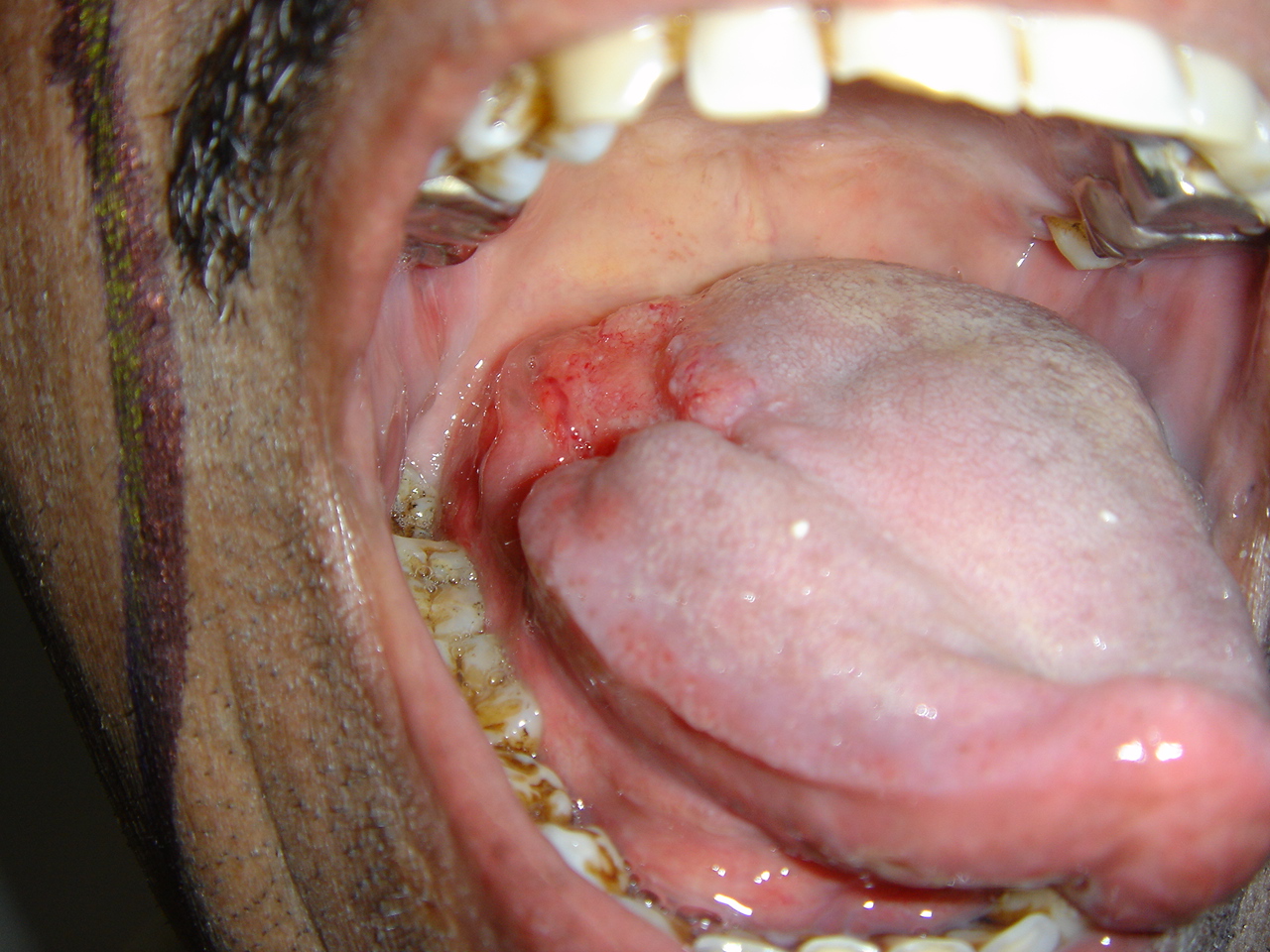 Base Tongue Cancer
Guess we have all heard this. But we miss the actual impact of tobacco on lives. We think that it will not be me who will suffer from the ill effects of tobacco like cancer, respiratory problems, hypertension, cardiac diseases. We do not care because we do not have the capability to envision what will happen to us 10-20 years down the line. At times it may take more than 20-30 years and we are made to believe that to live life one needs o indulge in pleasures like tobacco and alcohol.
From behavioral studies we also know that mere statistics or number may not motivate us to act. Millions of children dying because of malnourishment, billions getting killed because of tobacco, road traffic accidents-do not motivate us to behave responsibly.
Individual stories of people who have suffered from tobacco will be presented later. Today let me numb you with numbers. All excerpts from Lancet series.
Base Tongue Cancer
1. According to WHO, tobacco use killed 100 million people in the 20th century and, if trends continue, it will kill 1 billion people in the 21st. Furthermore, by the year 2030, 80% of these deaths will be in low income and middle-income countries.
2.Asia is at the frontline of the tobacco epidemic. Campaigns to curb the epidemic must succeed in this region if the world aspires to be free from tobacco in the 21st century.
3.Tobacco was politicised in the late 1980s, when the Office of the US Trade Representative threatened various Asian jurisdictions with trade sanctions under Section 301 (a) of the Trade Act of 1974.1 With these threats of economic sanctions, Japan, the Republic of Korea, and Taiwan bowed to US pressure and accepted American cigarette imports.
4.The market share of US cigarettes in the four affected jurisdictions in Asia increased substantially after the countries were compelled to import US tobacco products under trade agreements—cigarette consumption per head was almost 10% higher than it would have been if markets had stayed closed to American cigarettes.
5.Research of the economic costs of tobacco has provided compelling data: between 2003 and 2008, 3·2% of total health-care expenditures in China were used to treat tobacco-related illnesses.
6.In 2012, the Asian Development Bank estimated that, in the absence of intervention, smoking will eventually kill about 267 million current and future cigarette smokers who are presently alive in five Asian countries (China, India, Philippines, Thailand, and Vietnam), and increases in tax would reduce the number of smokers and the number of smoking-related deaths, and would generate substantial new revenues.
7.More than half the tobacco consumed in the world is consumed in Asia.
Action:
Quit Smoking, Quit Tobacco
Do not tolerate passive smoking
Avoid Tobacco in any format
If you have never tried tobacco, never try it!
Go to the nearest cancer hospital to see for yourself what one suffers.
It is not just cancer, meet people who have had heart disease, respiratory problems.
References:
Thursday, May 02, 2013
Cardiovascular Risks With Azithromycin
Azithromycin is an important antibiotic used by Pulmonologists, ENT specialists, General Practitioners and other doctors.
Azithromycin has had a recent label change which warrants this writing.
The revised label advises against the use of azithromycin in patients with known risk for QT interval prolongation, hypokalemia, hypomagnesemia, bradycardia.
This label revision is because of post marketing surveillance findings, an observational study involving Tennessee Medicaid Patients and also Danish national healthcare data.
Excerpts"
Azithromycin has had a recent label change which warrants this writing.
The revised label advises against the use of azithromycin in patients with known risk for QT interval prolongation, hypokalemia, hypomagnesemia, bradycardia.
This label revision is because of post marketing surveillance findings, an observational study involving Tennessee Medicaid Patients and also Danish national healthcare data.
Excerpts"
“For every 21,000 outpatient prescriptions
written for azithromycin, one cardiovascular death occurred in excess of those
observed with the same number of amoxicillin prescriptions. The excess risk
over amoxicillin varied considerably according to cardiovascular risk factors;
the researchers estimated that there was one excess cardiovascular death per
4100 prescriptions among patients at high cardiovascular risk but less than one
per 100,000 among patients with lower cardiovascular risk.”
“The risks and benefits of antibacterial
therapy should be considered in prescribing decisions. Pharmacologic and
epidemiologic data point to lethal arrhythmias as a potential consequence of
QT-interval prolongation with use of azithromycin, other macrolides, and
fluoroquinolones. This possibility should give clinicians pause when they're
considering prescribing antibacterial drugs, especially for patients with
preexisting cardiovascular risk factors or clinical conditions in which
antibacterial drug therapy has limited benefits.”
Cardiovascular Risks with Azithromycin and Other Antibacterial Drugs
Subscribe to:
Posts (Atom)